Why every handoff costs you time

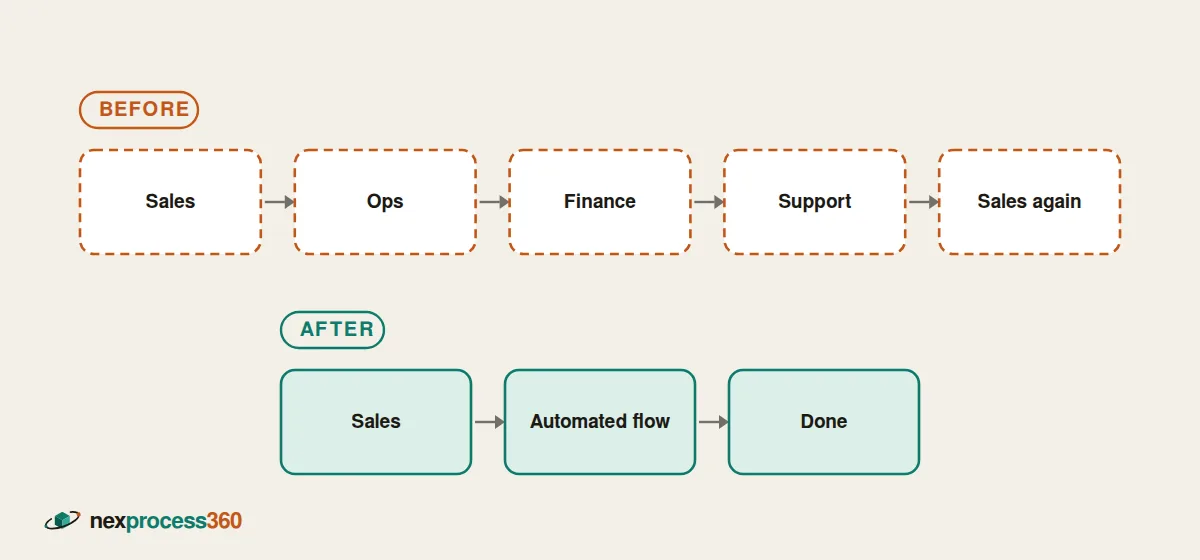
When work moves from one person or team to another, it stops. It sits in an inbox, waits for someone to notice it, and often loses context on the way. That pause is a handoff, and most slow processes are full of them.
Why handoffs hurt
- Waiting: work queues until the next person is free.
- Lost context: details are retyped or forgotten.
- No owner: when something is late, nobody is clearly responsible.
How to count them
Pick one process and list every step in order. Each time the work changes hands, add one. Include handoffs to systems that need manual input, such as a spreadsheet someone must update.
How to reduce them
- Remove steps where work is only passed along and nothing is added.
- Give each handoff a named owner and a time limit.
- Replace email handoffs with a shared workflow that routes and reminds automatically.
Even removing one handoff in a six-step process makes a visible difference, because you remove both the work and the wait.
Related reading and services
MethodHow to identify process bottlenecks (and not fix the wrong one)Five practical ways to find a process bottleneck: queue observation, timestamp sampling, work-in-progress counts, rework tracking and asking where people wait.ServiceProcess improvementRemove waiting, rework and double entry before you spend on software.ChecklistsBusiness process audit checklist: 40 questions to ask before you change anythingA practical business process audit checklist covering ownership, triggers, handoffs, data, controls, performance and documentation. Use it before any improvement or automation project.Illustrative case studyEmployee Onboarding Automation (Illustrative)Illustrative scenario: accounts, forms and a day-one plan prepared the moment an offer is accepted, so new hires start productive and HR stops chasing.
Want to fix a process like this?
Book a free process review. Bring one slow process and leave with three improvement ideas.
Book a free review