RPA for order entry at a distributor
Illustrative scenario. This page describes a typical project and the outcomes we would plan around. It is not a report of a named client’s results. Targets are set with you after the free process review.
The situation
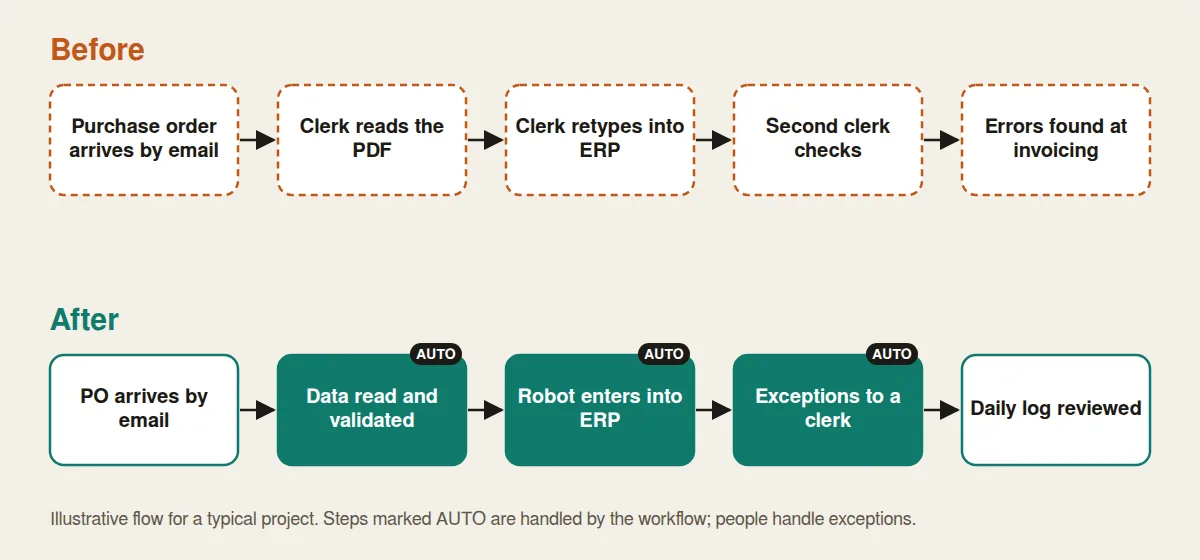
A distributor receives around 150 customer purchase orders a day, mostly as emailed PDFs. Four clerks retype them into an older desktop ERP that offers no import function and no API. Entry errors surface at invoicing and cause credit notes and customer calls. The vendor quoted a significant fee for an integration module, and the company plans to replace the ERP in a couple of years.
Why this is a case for RPA
The task is high-volume and rule-based, the screens are stable because the software is old and rarely updated, and there is no other route in. The expected life of the system is short, which makes an expensive integration hard to justify. It is the kind of situation described in RPA vs traditional automation.
What we would do
- Select the order types. Start with the two or three customers whose orders follow a fixed format. Leave the unusual ones for later.
- Read and validate. Extract fields from the order, check them against product and customer tables and flag mismatches before anything is typed.
- Pilot in parallel. The robot enters orders on a test company in the ERP while clerks continue as normal. Every result is compared.
- Go live in stages with dedicated robot credentials, limited permissions and a daily log reviewed by a named person.
- Plan maintenance. Document what breaks the robot, such as a changed screen or an expired password, and who fixes it.
What stays manual
Orders that fail validation, new customers, and any order above an agreed value. Clerks handle these from a short exceptions list.
What we measure
Orders entered per clerk per day, entry error rate caught at invoicing, exceptions per 100 orders and robot failures per month, with the time taken to recover from each.
Typical outcome targets
Fewer retyped orders and fewer credit notes from entry errors. The business case includes licence and maintenance costs over three years, and we show the break-even with the assumptions visible.
This case study describes a typical project of this kind. It is not a named client story, and the targets are planning figures we would agree with you after a free review, not results we are claiming.
Related reading and services
Want to fix a process like this?
Book a free process review. Bring one slow process and leave with three improvement ideas.
Book a free review